Category "Daycare Kids"

11Jun2022

What are the characteristics of a high-quality kindergarten classroom? What can parents expect to see in the curriculum? How can parents continue homeschooling? In short what do children learn in kindergarten?

The answer is that kindergarten provides the cornerstones of physical social and emotional development as well as the foundational knowledge of language literacy thinking and cognitive skills. Equally important it provides a bridge from homeschooling or preschool to more traditional education. In the classroom children must interact with the teacher develop a set of rules and learn from each other.

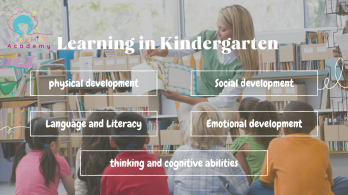
Learning in Kindergarten

According to the National Association for the Education of Young Children’s Primer a high-quality kindergarten should address learning in the following categories:

  • physical development: This is the development of gross motor skills meaning the movement of arms and legs as well as fine motor skills or the use of hands and fingers. Playing outdoors and doing physical activity as a class address the former. Puzzles and other classroom activities address the latter.
  • Social development: This is how children interact with others including cooperation making friends resolving disputes and other skills. Many aspects of classroom activities will be aimed at developing these skills and helping children get along with each other.
  • Emotional development: This helps children understand and manage their own feelings. “Teachers help children identify conversations and express their emotions and express concern for others,” the association wrote. “They also support children’s development. Self-regulation – being able to manage one’s own feelings and behavior. “
  • Language and Literacy: This develops communication through reading writing talking and listening. Literacy is the main focus of early learning especially in kindergarten because these skills are so important. Students learn to read so they can read for later grades.
  • thinking and cognitive abilities: This encourages students to investigate observe ask questions and solve problems. “Teachers help children plan what they are going to do encourage children to discuss and think about ideas more deeply and involve children in making decisions” The association wrote.

Subjects such as math reading writing science social studies and art are also offered in quality kindergartens you can find energy and activity in a healthy kindergarten classroom that engages children with both learning materials and promote each other in all aspects of development.

In kindergarten what’s important but you don’t always see is that interesting learning is happening.

When kids sit at their desks all day doing worksheets and stuff like that it doesn’t really correlate with what we know about the brain and what kids brain learning.

How Parents Can Help

How Parents Can Help

How Parents Can Help

According to education experts parents can do a lot to help kindergarten-age children develop in all of these categories, Parent involvement is key.

Skills such as persistence and stamina are essential for children to solve basic tasks of spoken vocabulary and number sense, Parents can play a huge role in encouraging children to think and explore.

Here are some things parents can do to help kindergarteners learn:

  • Encourage exploration: Education experts say daily activities may be the primary opportunity for kindergarten-age children to learn everything from cognitive skills to literacy. An example is a simple trip to the grocery store.
  • Talking about the difference between vegetables Talking about the color of the produce Talking about how much you need to help them understand the cost of things – all these everyday moments are such important learning pieces when they go to school.
  • Have a conversation: It can be very rewarding to take the time to have full conversations with children and explain what’s going on in their home whether it’s cooking a meal or watering the garden.
  • Read: Few things improve literacy more than reading for and with children. It’s always worth the time to pick out a large collection of engaging books at home and read them together.
  • Reading to children is always beneficial: It doesn’t matter how old you are it doesn’t matter how long you’ve been doing it. If you only have 15 minutes a day those 15 minutes of reading time are invaluable to your child.
  • Develop everyday skills: Anything that requires thinking and cognitive skills can help children learn. “To enhance learning in kindergarten I would consider anything that promotes the development of executive function in the brain. So like any Develop the ability to think critically problem-solve multi-task organize plan or analyze.
  • Physical exercise is encouraged: There are many opportunities to develop motor skills but experts also say physical activity can be combined with reading and other subjects to make learning more fun and rewarding. For example after listening to an adult read a story children can draw pictures or act out been read.

6Jun2022

Children’s experts say all children can benefit from preschool programs that help them prepare for kindergarten. According to Dr. Kathleen McCartney. Dean of Harvard Graduate School of Education and Advisor to Parents Magazine “Evidence is growing that kids get a lot from kindergarten”.

Preparing Academically for Kindergarten

The academic aspects of Pre-K help students prepare for kindergarten. Children in the premium Pre-K program will learn pre-literacy and pre-math skills. They touch alphanumeric shapes and colors. These skills help build a foundation for the beginning of kindergarten. children Children who participate in Pre-K enter kindergarten with a larger vocabulary with stronger basic math skills and better pre-reading skills than children who do not participate.

Social and Emotional Preparation for Kindergarten

Pre-K is more than academic preparation. Children who enroll in a Pre-K program rather than a child care program or stay at home with their parents often enter kindergarten socially and emotionally ready to be students. They have been exposed to the classroom structure and will have a Better understand the type of behavior they expect.

Students in preschool start kindergarten with better social and behavioral management skills because they have learned to socialize with other children.

Other classroom skills developed in Pre-K include:

  • Focusing attention on a teacher
  • Listening while others are speaking
  • Waiting until it is their turn to speak

Children learn to become more independent not only to take care of themselves but also to help their preschool classmates. Young children are naturally inclined to want to help and be able to do things on their own. Pre-K prepares children for school by establishing structured routines such as:

  • Clean up the activity before moving to the next one
  • Store personal items in your own “cubby”
  • Wash hands before lunch or snack time for personal hygiene

Pearly minds offers Pre-K classes including. Pearly minds excels in providing developmentally appropriate environments and activities for all students as well as preschool social activities for young children. These programs help instill a A love of lifelong learning in children that will help them prepare for kindergarten and succeed in school and in life as they grow.

31May2022

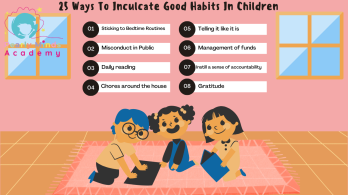
For you, 25 Ways To Inculcate Good Habits In Children because Children’s good habits play a vital part in forming and shaping their personalities and behaviors. Parents who want to raise excellent human beings to search for advice on how to teach their children healthy behaviors. Children, on the other hand, learn by example. As a result, as parents, you must lead by example.Also, explain why it’s important to create excellent habits to motivate kids to do so.

25 Ways To Inculcate Good Habits In Children

Let’s look at Ways To Inculcate Good Habits In Children.

Having a good habit is similar to having a valuable life skill.

A child’s routine, like clay, may be easily sculpted while they are young.

They are exposed to a variety of physical and mental challenges daily. It is simple for them to form habits (be it good or bad).

It is incredibly tough to break a habit as an adult. Every child is their parents’ future.

Breaking Bad Habits and Developing Good Ones.

As a result, to secure a happy future for their children, parents must constantly work to ensure that their children acquire and adopt only positive habits and behaviors.

The term “good habits” refers to good activity for a person’s physical or mental health development.

It is frequently associated with an outstanding level of self-control and discipline. These practices can benefit a person in a variety of ways.

Simultaneously, they assist them in continuing to grow or better their surroundings.

1.  Sticking to Bedtime Routines

Children should get at least 8 hours of sleep per night.

They must rise early and refrain from sleeping late.

2.  Ways To Inculcate Good Habits In Children: Misconduct in Public

Following traffic safety standards, not speaking disrespectfully to waiters or merchants, not defacing public structures and monuments, etc.

3.  Daily reading

Children must develop the habit of reading every day.

This will aid in the development of their communication skills, vocabulary, and imagery abilities.

It is also required for their academic success.

4.  Chores around the house

You can never have too young a child to assist you with household duties.

Maintain their involvement in all everyday activities.

They will be able to learn things more rapidly as a result of this.

5.  Telling it like it is

The importance of teaching children to tell the truth, cannot be overstated.

Lying is a harmful habit that they should be prepared to break.

6.  Management of funds

One of the Ways To Inculcate Good Habits In Children is the Management of funds.

It teaches kids the importance of financial responsibility and helps them avoid impulse purchases.

Follow a system of providing kids pocket money and encouraging them to keep track of how they use it regularly.

7.  Instill a sense of accountability

Every individual is accountable for their conduct.

This crucial habit must be instilled in children for their welfare.

Instill a sense of accountability

Instill a sense of accountability

8.  Gratitude

Teach your youngster to respect everyone by greeting them with a respectful greeting.

They must be encouraged to say please, thank you, apologize, and excuse me frequently.

They need to learn how to communicate effectively with a variety of people.

9.  Animals and birds should not be harmed

Animals and birds are living things, and children should be taught this.

They might be pleasant and communicate in their manner.

They must not injure them. Keeping a pet is instead recommended.

10.             Ways To Inculcate Good Habits In Children: Time is a precious commodity

We must teach our children that time is money and that once it is gone, it is gone forever.

Children must be taught how to manage their time and be on time.

11.             Take a walk outside

It’s just as crucial to have fun as it is to work.

As a result, we urge our children to participate in physical activities for at least 1 to 1.5 hours every day.

12.             Getting Lots Of Water

Water transports all of the nutrients necessary for cells and, more critically, aids in the removal of waste products from our primary organs.


Children should be encouraged to drink plenty of water throughout the day since it will help them regulate their body temperature.

13.             Ways To Inculcate Good Habits In Children: Healthy Eating

It must become a habit to eat a balanced and nutritious diet.

Children should be encouraged to consume fresh fruits instead of greasy and sugary snacks.

14.             Maintain a clean environment

Because young children often play for lengthy periods, they are more likely to be exposed to germs and pathogens.

Parents are responsible for their children’s cleanliness.

15.             Breakfasting on a Healthy Basis

Almost every kid dietitian recommends a nutritious breakfast.

It is the most important meal of the day since it offers us tremendous energy.

Before sending their children to school, parents must ensure that they have a nutritious and pleasant breakfast.

16.             Before and after a meal, wash your hands

This keeps the common cold, flu, and other diseases from spreading among the children.

17.             Brushing teeth at least twice a day

Another essential habit for children to develop is cleaning their teeth regularly.

This aids them in keeping their teeth clean and decay-free.

18.             Walking

One of the most enjoyable family activities is walking.

It allows parents to spend more time with their children and encourages them to keep active.

19.             It’s a tidy environment

Before getting ready for school, children should be encouraged to make their beds or arrange their areas.

They must learn that hygiene is second only to godliness in importance.

20.                  Table etiquette

Parents must teach their children fundamental table etiquette and teach them good eating habits.

Children must be taught that their acts and activities should not make others uncomfortable.

21.                  Listening is a skill that may be learned

The youngster must pay attention and attentively listen to everything taught in class to comprehend what is being taught.

It’s pointless to be physically present.

It is necessary to teach students how to be mentally present in the classroom.

22.                  Ways To Inculcate Good Habits In Children: On-time completion of duties

Children must be encouraged to do all of their homework and assignments on time regularly.

They must recognize the importance of fulfilling deadlines.

23.                  Every day, study

Youngsters must comprehend the significance of everyday lessons.

At least two hours of daily study and review are recommended.

This will assist the pupils in better understanding what they are being taught.

24.                  Ways To Inculcate Good Habits In Children: Collaborative work

Working alone vs. working in a group has a significant difference.

Individually, children may excel, but they may fall short of showcasing their abilities in a group setting.

As a result, teaching youngsters to work in groups is always a good idea.

25.                  Make use of physical assets

Everything is becoming on-screens and online in today’s environment.

Children must be discouraged from using these materials frequently.

They should make it a habit to write and read physical copies of books and magazines.

These materials should only be used to supplement your knowledge.

30May2022

The characteristics of nursery rhymes are varied. But in general, Nursery rhymes instill a strong sense of happiness in children. They “feel well” and are content with themselves as time passes. Children who know nursery rhymes have a lot of confidence. They are interested and inventive, and they can demonstrate their ability to repeat or sing a verse from memory with great pleasure. Their unique use of voice, eyes, facial expression, and body language bring the lyrics to life.

Characteristics of nursery rhymes

Before we discover the characteristics of nursery rhymes, we have to know what these songs are in the first place and what benefits?!

Nursery rhymes are a genre of English literature that is unique.

Nursery rhymes are often designed to be read aloud like plays and narrative poems.

This allows the reader or listener to connect with the piece’s literary and linguistic strategies fully.

Although varied styles, tones, subjects, and themes may be found in nursery rhymes, certain common qualities, such as:

Imagery can be found in all of them.

Benefits of Nursery Rhymes

Repetition, double rhymes, and the ability to use alternate lyrics are all common elements of nursery rhymes, and it’s one of the benefits of Nursery Rhymes.

They utilize melodic contours in phrases after a succession of arch formations known as an anacrusis.

The idea of up and down is used in terms that have an ascent and a decline.

Nursery rhyme lyrics also have aspects of tension and resolve.

Pitch, loudness, and accent are typically used to emphasize the beginning, middle, or finish of a phrase or sentence, and the placement of these elements modifies the meaning.

Rhymes lend themselves nicely to dramatization, with words and gestures reinforcing the message.

All of this aids in the formation of their linguistic abilities.

The Main Characteristics of nursery rhymes

Nursery songs have some main distinguishing characteristics, most notably as follows:

The Main Characteristics of nursery rhymes

The Main Characteristics of nursery rhymes

Language

When a poem or composition corresponds to the general qualities of a nursery rhyme, it’s easy to detect.

One of the most distinguishing features of a nursery rhyme is when written in basic, understandable English.

As the name implies, nursery rhymes are meant to be understood and sung by children of a nursery age or skill level.

That isn’t to suggest that adults and older children can’t appreciate the rhymes.

Many nursery rhymes have their origins in folklore tales that were not meant for children.

They are, nevertheless, designed to delight youngsters in their current setting.

Resolution and tension

Resolution and tension are key factors within the Characteristics of nursery rhymes.

Nursery rhymes are stories in themselves. The main character is frequently placed in tension or conflict in the rhyme’s storyline.

They will seek to settle this dilemma throughout the poem.

The point of tension in Incy Wincy Spider, for example, is when the rain pours down the drain and sweeps Incy Wincy away (“Down poured the rain and swept the spider away”).

Later, the famous spider resolves the crisis by re-climbing the drain after the sun appears.

Repetition

This occurs when a word or phrase appears in a piece of writing more than once.

To get the intended impression, the writer repeats the words. Repetition can be used to emphasize a point or to make anything seem better when said aloud.

Repetition is frequently employed in nursery rhymes to make the tune memorable and easier to recall.

Because our brains appreciate patterns and songs with repetition stuck in our heads.

Characteristics of nursery rhymes: Music-related links

What would life be like without music?

Nursery rhymes are poetry that is frequently connected with a particular song or melody.

We automatically say the words to music for grownups or individuals who know a lot of nursery rhymes.

Morals

Nursery rhymes may teach us all a thing or two.

Many well-known rhymes contain tale lessons that may be conveyed lightheartedly.

The Three Little Pigs, for example, may teach youngsters the value of planning and work together.

Similarly, Humpty Dumpty teaches youngsters how to play healthily and safely.

The rhyme’s plot generally includes a more profound message to instill a specific set of values in children.

The rhyme becomes more remembered when melodic contours (a fancy way of stating the pattern of notes inside a song) are used.

When said aloud, nursery rhymes need the speaker to pronounce each word/line in a certain cadence and tone.

This is an essential feature of the format.

Singing nursery rhymes is also fun because of the musical ties to the words, which are the most critical Characteristics of nursery rhymes.

Characteristics of nursery rhymes: Rhyme

It’s in the name; nursery rhymes tend to rhyme.

Rhyme is a method that uses sounds rather than phrases or words to follow the principles of recurrence.

In the last syllable of two or more words, a rhyme will repeat comparable sounds, if not the identical sound.

This feature makes a nursery rhyme easy to memorize and enjoyable to listen to.

Characteristics of nursery rhymes: Rhyme

Characteristics of nursery rhymes: Rhyme

Entertainment

Keep in mind that nursery rhymes are meant to delight youngsters.

An entertaining game may be created by adding music and storytelling to a rhyme.

That’s not to claim that all nursery rhymes end well.

Some stories are entertaining because they pay attention to warnings or create shock in their characters’ journeys.

The majority of nursery rhymes, on the other hand, are designed to entertain and pleasure youngsters.

Rhymes for more direct instructional aims, such as counting or learning the alphabet, can also be found.

Conclusion

Nursery rhymes have a lengthy history.

Adults recall the little verses taught to them by their parents when they were youngsters.

As a result, these rhymes became a part of English culture.

During English classes, primary school students in Germany must study English culture to understand children’s lives in a foreign nation.

Characteristics of nursery rhymes have an essential role in the lives of English youngsters.

As a result, youngsters must study about it. Rhyme, rhythm, and chunks are helpful when learning a language.

The rhymes assist the children in learning the structure of an English phrase.

29May2022

What age is best to send a child to nursery? Unfortunately, there is no obvious answer to this issue. Instead, you must examine a variety of crucial elements, such as scientific findings, official government guidance, and, most importantly, your family’s circumstances and your child’s specific requirements and development.

What age is best to send a child to nursery?

About What age is best to send a child to the nursery school? We see that:

The number of babies in nurseries under the age of one year has increased dramatically.

And a big part of this is due to women feeling pressured to return to work sooner.

The financial and career pressure to return to work is apparent, especially with:

  • Introducing a part-time job
  • Freelance work
  • Contract work
  • Flextime

However, many parents are made to feel terrible if they return to work early in their children’s lives.

And enroll them in the nursery, making it a no-win situation.

However, you might find it comforting to know that a government-funded study from 2010:

Discovered that 30% of the children studied began in some EYFS care outside the parental home before their second birthday.

Another 31% started between the ages of 2 and 3, 27% when they were over 3.

And only 3% when they were above the age of 4. Whatever your situation, there are solutions available to you.

What are your choices?

What age is best to send a child to the nursery? And What is your alternatives if you want or need to return to work?

Between the ages of 0 and 1, babies

Some nurseries accept babies as early as three months old.

However, the youngest babies typically begin nursery when they are three months old.

If your kid needs to go to nursery at this age, be sure the facility you pick has expertise with infants and meets specific regulatory requirements.

For example, there are suggested ratios for the number of children to adults: one adult for every three babies aged 0-2 years.

preschool age: An age between 1 and 2

In 1981, just around a quarter of women returned to work after having a child; now, it’s just over three-quarters.

According to a study, children who join the nursery after staying at home from birth exhibit significant stress levels during the first few weeks of separation from their parents.

According to a Cambridge University research, children’s stories of the stress hormone cortisol increased over the first nine days.

without their mother present compared to their pre-nursery levels.

Even though the children seemed comfortable and happy in a nursery, the levels reduced but remained higher five months later.

However, the study’s authors concluded that this did not imply that nursery school was harmful to children of this age.

They concluded that youngsters require extra time.

And attention when they come home to regain emotional equilibrium in preparation for the following day.

This demonstrates the importance of finding a nursery school for your kid with:

Procedures to reduce the stress that toddlers suffer while transferring from home care to daycare.

preschool age An age between 1 and 2

preschool age An age between 1 and 2

What age is best to send a child to nursery? Three and over

While most children begin nursery before the age of 3 because of that nursery age range.

It does not imply that your child must attend nursery or that they must attend at all.

Many children are cared for at home until they are ready to start primary school, aged four or over.

However, parents often choose to send their children to daycare at this age.

Because from the first school term after their children’s third birthday.

Parents are eligible for at least ten hours of free preschool nursery school each week, funded by the government.

Is there a simple solution?

There isn’t, in the end. Putting your child in nursery, no matter what age you choose to do it at, or if you decide to do it, maybe tricky.

About What age is best to send a child to nursery? Whatever age they start nursery.

There will be benefits and drawbacks; nevertheless, it’s vital to realize they generally balance out.

Whatever you choose, there are many alternatives available, and you should always ask questions that a reputable nursery would gladly answer.

What Are the Advantages of Enrolling Your Child in Nursery School?

Learn about the benefits of this by looking at the following paragraphs:

Nursery school helps your child become ready for school

Nursery teaches youngsters how to interact with adults and learn in a structured atmosphere.

This atmosphere encourages youngsters to learn skills in preschool age such as when to ask to use the restroom and how to wash their hands.

Children will also learn to share and take turns without throwing a tantrum.

Nursery aids in the development of social skills in youngsters

After we found out what age is best to send a child to nursery? We have to look at this fantastic nursery feature for the baby.

It is critical for your child’s growth to interact with other children.

Before kids start school, going to nursery helps children develop social skills and learn how to make friends.

If both school and nursery are close to your house, they may already have some friends, which will make it easier for them to adjust.

Nursery is also beneficial to parents

Nursery practitioners will be able to provide the finest possible care for your children.

At the same time, you go about your business as a parent, whether that is going to work, grocery shopping, or simply taking a well-deserved break.

Professionals can also provide guidance and comments on your child’s growth.

Conclusion

About What age is best to send a child to nursery?

Choosing the appropriate age to send your kid to the nursery is a highly personal decision based on:

When you need to return to work and what you believe is best for your child.

The essential thing to remember is that you do not have to feel guilty, regardless of your child’s age.

Your kid will be well cared for and develop pleasantly and healthily if you select a decent nursery.

29May2022

Nursery help children’s social development as Childcare is a highly personal decision, and it’s vital to do what’s best for you and your family. Still, if you’re considering sending your kid to a nursery, it’s a terrific place to begin acquiring some of the critical social skills they’ll need later in life. Continue reading to learn why social contacts are crucial in a child’s early years and why Nurseries are an excellent place to start.

Nursery help children’s social development

As a parent, you must make several decisions for your kid.

One of them is deciding whether or not to send your child to nursery and when the optimal time is for you and your child.

If your child isn’t currently in a nursery but is showing symptoms of being ready to fly.

It would help if you investigated what a nursery has to offer.

Of course, it’s normal to be concerned about being separated from them, especially if they’re tiny.

But the move to nursery may be an excellent experience for your child with several advantages.

Nursery help children’s social development because our early childhood specialists outline crucial ways that nursery surroundings may aid children’s growth and confidence.

The concept of social interactions

Social interactions are how we act and react to others.

They are the foundation of every connection between two or more individuals, whether they are two or 100 years old.

Physical motions, body language, talking and discussions, playing, sharing, and other factors all play a role in these encounters.

What is the significance of this?

  • Increased cognitive capacity
  • Excellent mental health
  • Communication skills
  • Independence
  • Enhanced physical health

These, especially elderly individuals, benefit from positive social contacts.

Early social contact is significant for a child’s development, and the correct setting may aid in the development of:

  • Excellent language skills
  • Creativity
  • Empathy
  • Communication
  • Confidence

As we shall see later, a nursery is one such place where these talents might flourish.

The concept of social interactions

The concept of social interactions

What are the benefits of sending your child to the nursery?

Going to the nursery is the first high-level social engagement for many children outside their friends and family.

Nursery help children’s social development, and social contacts are critical for optimal mental and physical development.

In conclusion, several advantages to visiting a nursery can directly influence a child’s growth.

Ways a nursery environment can benefit children

How does the child benefit from the nursery environment?

Nursery help children’s social development: Participate in social

Social connection with other children of a similar age has several advantages, including:

  • Making friends and learning how to form bonds
  • Developing the ability to share
  • Switching roles
  • Paying attention to others
  • Playing cooperatively as well as individuals with others in groups
  • They are learning from their classmates, copying and assisting one another.

Improve Your Communication Skills

Your child’s communication skills will increase, as will their vocabulary and language.

As they become more socialized and engage with their classmates and nursery staff in various settings.

They are learning to express their thoughts and ideas.

Engaging with individuals other than their parents and engaging with friends is vital for their development.

Playing with other children at nursery is also an excellent method for them to develop empathy and a greater understanding of the feelings of others.

Increased Confidence and Independence

Your child’s first time away from you for a short period will probably be in Childcare.

It can be nerve-wracking for both of you initially.

Nursery help children’s social development. It does, however, provide your kid with the chance to be self-sufficient.

It has the flexibility to explore and form new relationships, which are essential for their long-term well-being.

Increased independence may help your kid develop their personality, temperament, thoughts, and ideas.

As kids discover more about life outside of their family, you may support them.

Nursery help children’s social development: Developing New Talents

Providing your kid with a diverse range of objects to discover and explore promotes the development of their interests and encourages them to try new things independently.

It’s a new and exciting adventure, with the bonus of leaving the dirty play in the nursery!

Academically, socially, and emotionally, your child will be acquiring new abilities every day.

Learning how to use mark-making tools, putting on their coat, and understanding mathematica犀利士
l ideas are a few examples.

These critical life skills will create the foundation for your child’s eventual maturity.

They are participating in activities and learning to complete simple chores independently.

Spending time with others can also help youngsters acquire confidence and create a foundation for school and real-life situations.

Nursery help children's social development Developing New Talents

Nursery help children’s social development Developing New Talents

Structure and Routine

Your child’s day is structured and routines in the nursery, including meal times, naps, and indoor and outdoor activities.

This pattern makes kids feel more confident and secure and in control of their emotions and is excellent school preparation.

When a kid understands what to anticipate and when to expect it.

Nursery help children’s social development, and It allows them to take a more active role in duties, such as:

Perhaps washing their hands before lunch and helping to clean up before leaving the house will become a habit they will maintain at home!

Your child will be part of nursery activities, learning new things all the time and getting out in the fresh air.

By keeping kids occupied with fun activities, they will be less likely to become bored.

It improves their physical stamina and promotes the development of considerable motor skills, both of which are essential for school and beyond!

Become a ‘School Ready’ student

Many of the activities, routines and skills learned at nursery can help your child transition to school. The nursery supports your child’s social development by establishing vital links outside of the family unit in preparation for school.

Getting Ready to Be Lifelong Learners

Many of the benefits stated above help build a solid foundation for your child’s future success.

Nursery help children’s social development and encourages critical thinking, a desire to learn, perseverance, and self-confidence.

Nursery school helps children prepare for life beyond the family and the transition to adulthood.

26May2022

What values do you infuse in your child? We want to instill certain ideals in our children. But how are we going to teach them? Experts advise on how to prepare strong values in children as they grow.

What values do you infuse in your child?

When we think about what a child needs to learn before the age of five, we often focus on equipping them with the skills they’ll need when they start school.

We want to see if kids can do simple things like buttoning their coat and counting to 10.. etc.

While these abilities are vital and provide the framework for a seamless transition to primary school.

Their beliefs will define who they are during their school years and throughout their lives.

So, what values do you infuse in your child?

What values do you infuse in your child

What values do you infuse in your child

What values do you infuse in your child: A sense of obligation

The buck will stop with you up to this moment and, to some extent, for years to come.

Children should, however, be taught the importance of responsibility — for themselves and their things – by the age of five.

You can’t expect an 11-year-old entering secondary school to become responsible suddenly.

Early on, the skills must be established.

Encourage your kid to be responsible for their belongings, such as carrying their bag, remembering their coat, and putting them away once they’ve used them.

Sincerity

When it comes to learning values and when we ask about What values do you infuse in your child.

We shoud know that children usually learn through their experiences.

Your most excellent strategy for instilling a proper attitude in your child is to exemplify honesty.

Donna Laikind, MS, LMFT, a psychotherapist in New York City and Fairfield County, Connecticut, says:

“There’s nothing that compares to modeling values.”

“The best lesson you can give children is to witness you interact with others honestly and properly as a parent.”

Kids absorb your behaviors like a sponge, even at a young age, so every white lie said in confidence may foster a lack of honesty.

While stating the truth might occasionally result in awkward circumstances or discussions.

This is part of teaching your child this value—honesty isn’t always simple, but it’s worth the effort.

Lying is typical for young children, especially toddlers, to evade punishment for conduct they know is wrong.

It’s critical to approach these discussions gently, providing them the chance to reveal the truth after lying.

If they admit to their wrongdoings:

You may still encourage this value by thanking them verbally for their honesty, even if you have to punish them.

It’s okay to fail

When we talk about What values do you infuse in your child?

We should know that It is also critical to enable young children to fail due to this.

This teaches children that failure isn’t something to be afraid of but rather a necessary step toward success.

When it’s something as basic as losing a treat because they couldn’t settle for their reading.

Learning that failure is okay is far simpler than learning loss for the first time when the stakes are higher.

As a result, while it may be tempting to jump in and nag, shudder, and coax a youngster into doing something.

Sometimes they need to learn the consequences to be more motivated to avoid failing the next time.

What values do you infuse in your child: Responsibility OR Accountability

Accountability for one’s actions is a necessary attribute because:

A kid to acquire since it establishes the standard for how they should act in daily life.

Parents and their children have an unspoken understanding on how they should behave.

Children must understand that if they breach the rules, they will face repercussions “Laikind agrees.

Accountability has its origins in the parent-child connection. Still, its actual test comes at school age.

When children must accept responsibility for their behavior without the constant guidance of their parents.

According to Lauren Ford, Psy.D., a paediatric psychologist in Los Angeles:

Teaching values are more complex than creating the expectation of good and wrong when this shift occurs.

“Simple educational ideals are insufficient,” she claims.

“It is more important to teach children how to solve problems based on their values than it is to convey values on a case-by-case basis.”

Moral reasoning, or what to do when confronted with an ethical problem that goes against your family’s ideals.

It an be complex for younger children to grasp.

Understanding the reasons behind your child’s beliefs as they progress through grade school and beyond.

On the other hand, may help you hold them accountable when they are confronted with peer pressure and more complex challenges.

What values do you infuse in your child Responsibility OR Accountability

What values do you infuse in your child Responsibility OR Accountability

Be respectful of others

When we talk about What values do you infuse in your child?

We should know that respect is an essential trait to instill in your kid when they enter school.

It applies to duties as simple as waiting for one’s turn to speak to more complicated notions like:

Comprehending world perspectives that differ from one’s own.

Dr. Mohr Lone is constantly inspired by:

How attentively youngsters listen to each other’s opposing viewpoints when she discusses philosophy with pupils.

Whether it was in a kindergarten class or with her son’s preschool class years ago.

After a fourth-grade class was asked, “What do we think happens when we die?” a discussion began.

Some students held strong religious ideas, some had atheistic beliefs, and many were undecided but ready to investigate options.

Dr. Mohr Lone states, “They could listen to one other.” “And many people continued saying things like:

‘Everyone has their perspective on this, and it’s interesting to hear what others have to say.'”

During philosophical discussions, respect in the classroom and beyond may have far-reaching consequences in real-world applications as a child matures.

All parents want their children to have particular beliefs.

Still, according to Dr. Mohr Lone, it’s equally crucial for children to learn how to appreciate individuals who have different perspectives on life.

“There are many different ways of looking at the world, all of which have excellent reasons and are worthwhile,” she argues.

“Our children, in my opinion, must realise that you may have a strong opinion while yet acknowledging that another person may see things differently and that their point of view is significant.”

25May2022

Learn the way for dealing with Tantrums. Because any parent might be frustrated by their child’s temper outbursts. Instead of seeing tantrums as a calamity, see them as chances for learning.

Dealing with Tantrums

Tantrums may make you doubt your parenting skills, but they’re a regular part of toddlerhood. Learn why child temper tantrums occur and how to handle them.

It might be challenging to refrain from having an outburst while your child has a tantrum.

Meltdowns are awful, but they’re a part of growing up, says Ray Levy, Ph.D., a clinical psychologist in Dallas and co-author of Try and Make Me!

Please continue reading to find out why dealing with Tantrums with toddler temper tantrums occur.

Dealing with Tantrums

Dealing with Tantrums

What exactly are tantrums, and how Dealing with Tantrums?

Tantrums occur in a variety of sizes and forms.

When your child ‘loses it,’ it can result in dramatic outbursts of rage, frustration, and disorganized behavior.

Screaming, stiffening limbs, an arched back, kicking, falling, thrashing around, or running away are all possibilities.

As part of a tantrum, children may hold their breath, vomit, smash items, or injure themselves or others.

Why do outbursts occur?

Tantrums are prevalent among children aged three to five years, but the question here is how dealing with Tantrums?

This is since young children’s social, emotional, and verbal development is still in its infancy.

They may become irritated because they are unable to convey their wants and feelings, including the desire to accomplish things for themselves.

They’re also learning that their actions have an impact on others.

Tantrums are one of the ways that young children express and control their emotions while also attempting to comprehend and alter what is going on around them.

Tantrums can also occur in older children.

This might be because they haven’t yet learned how to safely express or regulate their emotions.

Tantrums can be triggered by a variety of factors in both toddlers and older children, including:

Temperament determine: how quickly and powerfully youngsters react to stressful situations or changes in their surroundings.

Children who are more sensitive to these things may be more readily offended by them.


Stress, hunger, exhaustion, and overstimulation can make it difficult for youngsters to express and control their emotions while remaining calm.

In situations that toddlers cannot handle, toddlers may struggle to cope if an older kid takes away a toy.

Strong emotions for children such as anxiety, fear, embarrassment, and wrath can be overpowering.

What Can We Do to Dealing with Tantrums and Prevent it?

When at all feasible, try to avoid tantrums from occurring in the first place. Here are some ideas that could be helpful:

Pay special attention to the positive aspects of your life.

Make it a habit to catch your child doing something positive.

Items that are off-limits should be kept concealed and out of reach.

This reduces the likelihood of conflicts.

This isn’t always practicable, particularly outside the house, where the environment is unpredictable.

Distract your child’s attention.

Please take advantage of your child’s short attention span by providing an alternative to the item they can’t have.

Replace the frustrating or restricted activity with a new one.

Alternatively, you may alter the surroundings.

Move your kid to a new room or take them outside.

Assist children in acquiring new skills and achieving success.

Assist children in learning new skills.

Praise them for assisting them in feeling proud of their abilities.

Also, begin with something easy before progressing to more challenging jobs.

When your youngster makes a request, think about it carefully. Is it ridiculous? Perhaps it isn’t. Choose your fights carefully.

Recognize your child’s boundaries.

It’s not the most fantastic time to go grocery shopping or attempt to cram in one more errand if you know your toddler is weary.

Managing your emotions when you’re having a tantrum

If you can remain calm when your child is experiencing a tantrum, you are modeling calm behavior for your youngster.

Here are some suggestions for staying calm and in perspective of Dealing with Tantrums:

Have a strategy in place for how you’ll handle a tantrum in any setting.

When the tantrum occurs, focus on putting your system into action.

Accept that you have no direct influence over your child’s emotions or behavior.

You can only keep your child safe and influence their behavior to reduce the likelihood of future tantrums.

Accept that change takes time to manifest. Your youngster has a long way before tantrums are no longer an issue.

It takes a lifetime to develop and practice self-control abilities.

Be wary of assuming your youngster is doing it on purpose or in an attempt to annoy you.

Children do not throw tantrums on purpose.

They’re either locked in a poor habit or can’t deal with the problem right now.

Maintain your sense of humor.

But don’t laugh at your child’s tantrum; your youngster may be rewarded with attention if you do.

It may also irritate your child if they believe you laugh at them.

Ignore other people’s nasty stares if they come your way.

They’ve either never had children or haven’t had children in such a long time that they don’t remember what it’s like.

Managing your emotions when you're having a tantrum

Managing your emotions when you’re having a tantrum

When Should I Consult a Physician?

Consult your doctor for dealing with Tantrumsif you experience any of the following symptoms:

When you respond to tantrums, you frequently feel furious or out of control.

You continue to give in.

You and your child will have a lot of negative sentiments as a result of the tantrums.

Also, You’re unsure what you’re doing or what your youngster is doing.

Tantrums become more frequent, severe, or persist for extended periods.

Your youngster frequently injures himself or others.

Your youngster appears to be irritable, frequently argues, and seldom cooperates.

And Your doctor can also check for any health issues contributing to the tantrums, but this is uncommon.

Hearing or visual problems, a chronic disease, language delays, or a learning impairment can all contribute to tantrums in children.

Remember that tantrums are typically harmless and will go away on their own.

Children learn self-control as they get older.

They learn to work together, communicate well, and deal with frustration.

Fewer tantrums – and happier parents — will result from minor irritation and greater control.

25May2022

Let’s know the Benefits of Quality Time with Children. The hectic pace of modern family life may make it easy to overlook how crucial it is to spend time with our children simply. One of the most valuable gifts we can give kids is our time. Summer provides many possibilities for family bonding and spending time together. Here are some reasons why you should prioritize quality time.

Benefits of Quality Time with Children

Investing in quality time with your kid regularly, especially if your child is in charge of the activities, may make them feel:

  • Calmer
  • Less stressed
  • Secure
  • Confident
  • Cooperative

Sibling rivalry is considerably reduced when parents spend meaningful time with each child.

Children seek significant time with their parents because they have a solid intrinsic and healthy desire for attention.

Learn more about the Benefits of Quality Time with Children by looking at the following paragraphs.

Benefits of Quality Time with Children

Benefits of Quality Time with Children

How to Make Quality Time

Here are some simple ideas for spending quality time with your children:

Maintain regular contact with your children.

Any form of connection with your children is vital and beneficial.

Whether face-to-face contact before school and work or sending them a small note in their lunch bags.

Every day, tell your child that you love them.

Make it very apparent to your child why you adore and respect them.

Make a bedtime ritual out of it, such as selecting and reading a short book.

With your gratitude, you may reinforce beneficial habits.

Prepare dinner and share it with your family. This encourages teamwork while also allowing the family to interact with one another.

Set aside time to conduct an activity with your child, and let them select what they want to do—crafting, baking, family game night, etc.

Play with your youngster, even if it’s only for a few minutes.

Make your youngster laugh by telling jokes. Laughter is beneficial to one’s emotional well-being.

Take a half-hour break from electronics and spend it listening to and chatting to your youngster.

Making a deep connection with your children is crucial, and it may be an easy goal to fit into your daily routine.

Doing so will have long-term consequences as they mature into contributing individuals.

Benefits of Quality Time with Children

The main benefits of Quality Time with Children are as follows:

It improves the self-esteem of children

Children with strong self-esteem spend time with their parents performing activities together.

When children believe that their parents appreciate them, they have a more positive attitude toward themselves.

To be meaningful, family activities do not have to be expensive outings; the critical aspect is simply being together.

You may go on a bike ride together or play a game.

It helps to enhance familial ties

Families who engage in similar activities have strong emotional attachments.

According to studies, families that participate in group activities together have a more profound dynamic link and can better adjust to events as a family.

Share your favorite pastimes, sports, novels, movies, and other plays.

Benefits of Quality Time with Children: promotes interaction

You create an environment for open communication when you spend time with your children.

Good communication is essential for your children to feel comfortable talking to you about anything.

Simply asking your child how their day went may have a significant impact.

Benefits of Quality Time with Children promotes interaction

Benefits of Quality Time with Children promotes interaction

It has the ability to help your child do better in school

Spending time with your children, especially in their early years, will promote an academic environment, assisting them with schooling or reading.

If your child feels at ease approaching you with homework, they are more likely to excel academically.

It fosters beneficial habits

Spending more time with parents reduces the likelihood of children and adolescents engaging in dangerous behavior.

Teens who have meals with their families on a regular basis are twice as likely to smoke.

Almost twice as likely to drink and one-and-a-half times as likely to use marijuana.

According to Arizona State University’s National Center on Addiction and Substance Abuse.

When compared to those who do not dine with their families as much, children who eat with them regularly have better food intake.

It can assist your youngsters in becoming excellent friends

One of the Benefits of Quality Time with Children is It can assist your youngsters in becoming excellent friends.

Children learn by watching their elders.

Spending quality time with kids sets a positive example for them.

They are more inclined to replicate your activities in their other relationships.

Simple activities such as:

Playing games with them will help them learn more about connecting with people and teach them important lessons such as sharing and compassion.

Above all, spending time with your family allows you to laugh and enjoy each other’s company!

Until the kids return to school.

Please take advantage of the time you have left this weekend and do something exciting with them.

Is it possible that we are spoiling our children by paying more attention to them?

Fear frequently emerges when you bravely share or act on your inner knowledge.

It may be at odds with your family’s or friends’ parenting styles or your society in general.

We’ve been conditioned to believe (in our culture as a whole) that giving our children:

The attention they require will “spoil” them or that giving in to them and allowing them to manipulate us will “spoil” them.

Yet, we now have a large body of evidence that supports parents’ instincts to be truly caring in their parenting of their children.

This even limits don’t need to be accompanied by a harsh tone.

And that being serious while still showing care and consideration for our children’s feelings is more effective.

We now know through decades of attachment research (the study of the parent-child interaction) that the cornerstone of secure attachment is:

Generally constant warm responsiveness to a child’s needs (as opposed to their desires).

And having a stable branch is a significant indication of raising a well-rounded, confident, and empathetic child.

Fears of giving a child too much loving attention are based on:

Outdated beliefs that ignore the child’s inherent goodness and a lack of trust that meeting a child’s needs is healthy.

And that the child’s success in meeting their dependency needs lays the groundwork for:

A more robust and more nutritional balance of independence and access to others throughout life.

20May2022

Here’s 10 Ways to Nurture Your Child’s Creativity and Imagination and get your kids thinking (and acting, writing and solving…) beyond the box. Drawing, narrating, and putting together wacky situations with toy animals have all made youngsters happy in studies.

Ways to Nurture Your Child’s Creativity and Imagination

Many people feel that creativity is something that one is born with rather than something that can be learned.

With the proper support and atmosphere, however, we can assist children in developing their creative abilities and expressing their imaginations.

Creativity may be expressed via:

  • Drawing and painting
  • Writing and reading
  • Dance and acting
  • Arts and crafts
  • Creative play

Children who have high creative thinking skills do better in school, but they also have more excellent executive functioning abilities.

That is why we must do all possible to foster our children’s creativity and imagination.

For you 10 Ways to Nurture Your Child’s Creativity and Imagination.

Create a creative environment at home

Ensuring your child is calm and comfortable at home may significantly impact whether they feel free to express themselves artistically.

Allowing kids to think and play without imposing harsh restrictions or making judgments.

And providing appropriate support offers an atmosphere in which they may explore their ideas and cultivate their creativity.

Create a creative environment at home

Create a creative environment at home

Ways to Nurture Your Child’s Creativity and Imagination: Inspire Big Ideas

Ask open-ended inquiries to pique your child’s interest and get their creative juices flowing.

It promotes creative thinking and encourages children to ask more questions of their own. Consider the following scenario:

  • What do you think would happen if we sprayed the clay with water?
  • What can we do differently this time?
  • What was the most challenging aspect?
  • Why did you go about it the way you did?
  • What was the most straightforward for you?

Have Access to Inventive Resources

Some creative activities, such as role-playing, singing, dancing, and acting, do not need the use of resources, while others must.

Having a plentiful supply of pencils, paints, paper, and craft supplies in your house.

All conveniently accessible to your child, ensure that they may express their creativity whenever the mood strikes.

Remember that you don’t need a large budget for supplies; old cardboard boxes, empty paper towel rolls, cereal boxes, and scrap paper are all good options.

Give your child some markers and masking tape, and you’ll be surprised at what they can do with such basic things.

Ways to Nurture Your Child’s Creativity and Imagination: Allow time for unstructured activities

When youngsters get alone time, they are more likely to be creative.

This is why scheduled playtime can be constraining because children are ‘supposed’ to be creative for a specific amount of time.

It is possible to encourage children to develop a creative attitude by letting them a couple of hours each day with a more flexible schedule.

In reality, it will allow youngsters to explore and create without being restricted by time constraints – after all, creativity requires breathing room.

Invest in open-ended toys

One of the Ways to Nurture Your Child’s Creativity and Imagination is investing in open-ended toys.

Open-ended toys are a good investment, but they also have a lot of creative potentials.

Anything from blocks to construction sets to toy animals to dress-up outfits to Lego may be:

Utilized to stimulate imaginative play and creativity.

Role-playing games

Creating role-playing scenarios with your children is an excellent method to encourage their creativity and imagination.

Role play is not only entertaining, but it also helps children build a strong problem-solving attitude for when problems emerge in real life.

Doctors, cops, stores, teachers, superheroes, or mythical characters like unicorns, dinosaurs, or princesses are all great role play options.

Ways to Nurture Your Child’s Creativity and Imagination: Make an environment that is both diverse and creative

It’s crucial to switch it up when you can since being creative in the same setting might grow dull for youngsters.

To ignite their imagination and foster other paths of creativity, we propose putting toys outside in the garden.

It is going to the park, having a stroll in the woods, or visiting a museum.

Cut down on your time spent in front of the computer

One of the Ways to Nurture Your Child’s Creativity and Imagination is to limit and reduce the amount of time you spend in front of the computer.

The amount of screen time youngsters has can limit their creativity since they are engrossed by:

Rather of spending time exploring their hobbies and honing their skills, they focus on what is in front of them on the screen.

Instead of watching TV or playing a video game on a tablet, encourage your youngster to play and create.

Cut down on your time spent in front of the computer

Cut down on your time spent in front of the computer

Showcase Your Ingenuity

Showcase Your Ingenuity is one of the ways to encourage your child’s creativity and imagination.

Children learn more from your actions than what you say, so if you’re actively exploring your creativity, your children will most likely want to do the same.

Attempt new things and fail.

Show them what you’ve made.

You’re showing kids that everyone can be creative, and there are many methods to do it.

Allow them to participate in your creative process, whether you want to:

  • Rearrange your furniture
  • Plant seeds in the yard
  • Paint a picture on your bedroom wall
  • Or construct anything

Allow children to understand that it’s okay to be different

Allow children to know that it’s okay to be different is one of the essential Ways to Nurture Your Child’s Creativity and Imagination.

Just because something is supposed to be one way doesn’t imply it has to be that way. It’s critical to teach your children that being different is good.

They should be encouraged to utilize their imagination and creativity rather than attempting to fit into predetermined roles.

Where the real creative magic happens is when there are no boundaries!

Conclusion

At the end about Ways to Nurture Your Child’s Creativity and Imagination, we should see some important points:

On the playground, children may develop their creativity.

Learn how to employ traditional children’s outdoor activities to promote learning and the benefits of playing in the green for child development.

A cardboard box can become a whole new universe for youngsters when they use their imagination and ingenuity.

As your child grows older, learn ways to assist them in developing this capacity.

Reading aloud together is a fantastic method to encourage creativity.

Learn ways to do reading aloud to children and make storytelling more engaging and entertaining.

Children may utilize their imaginations and explore creativity via arts and crafts.

For some artistic inspiration, please go through our collection of fun projects.